
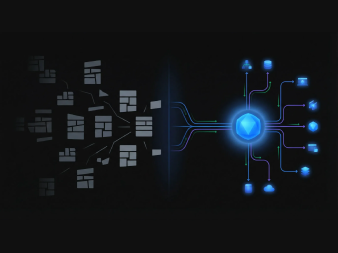
In commerce, “source of truth” is often used as a slogan. In reality, most product data is copied, modified, and fragmented across systems. This article explains the real difference between duplicated data and owner‑controlled master data — and why true trust can only exist when the source is clear, live, and accountable.
The Illusion of Accuracy
Most commerce platforms look consistent on the surface. Logos match. Product names look the same. Specifications feel familiar.
But behind the interface, the data is often:
- copied from multiple places
- manually edited
- outdated
- missing context
- impossible to verify
The same product may exist in dozens of versions across shops, portals, and marketplaces.
It feels connected. It is not!
Copies Create Drift
Once data is copied, it starts to drift. One partner updates a description. Another changes a spec. A third adds marketing language.
No one knows which version is correct.
This leads to:
- customer confusion
- wrong expectations
- higher return rates
- support overhead
- lost trust
The problem is not the people. The problem is the model!
What a Real Source of Truth Means
A real source of truth is not a file, a feed, or a database snapshot.
It is a living object:
- owned by the data creator
- maintained at the source
- updated in real time
- reused without being copied
The owner is accountable.
The data is verifiable.
The context is preserved.
That is what “source of truth” truly means.
Master Data vs. Context
Trust requires a clear separation between:
- Master Data — the certified facts owned by the manufacturer or publisher
- Context Data — prices, availability, rankings, or editorial layers added by others
Master data must never be overwritten. Context can change, but truth must remain stable. Without this separation, every system becomes unreliable.
Why AI Makes This Urgent
AI systems amplify whatever data model exists. If the web is built on copies, AI learns from contradictions. If the web is built on sources, AI can reason with confidence.
Trustworthy AI depends on trustworthy data. There is no shortcut.
From Distribution to Connection
The old model distributes copies. The new model connects to sources.
Instead of asking: “Where should I copy this data?”
We should ask: “How can I reuse it without breaking trust?”
This shift is foundational for modern commerce.
Closing Thought
A “source of truth” is not a slogan. It is a design principle. When data remains owned, live, and connected, trust stops being a promise — and becomes infrastructure.