
We are facing an important change in the market. Artificial intelligence will not only write texts or answer questions in the future. It will compare products, make recommendations and prepare purchase decisions. For that, artificial intelligence needs good data. Our core belief is that data itself will become an important product in the future — not only for people, but also for digital assistants and AI systems. This is exactly where we see the opportunity for DCI, ContentFactory1, plugilo and pluggy.
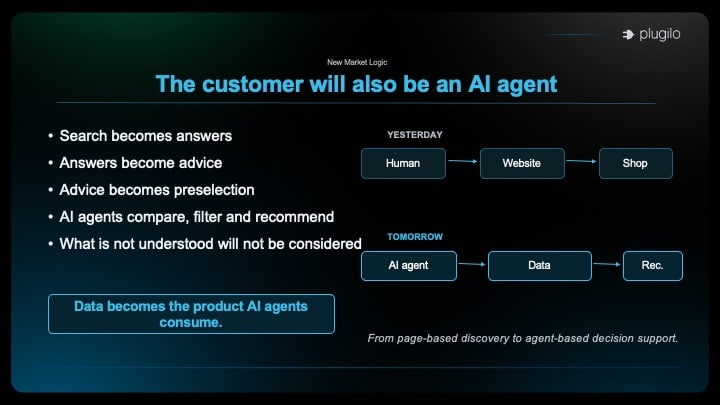
The customer of tomorrow is no longer only the person who visits a website or searches through a shop.
More and more often, a digital assistant will stand in between. This assistant searches, compares, filters and suggests suitable solutions to the user. This means companies must no longer be understandable only to people. They must also be understandable to AI systems. If a product or company is not correctly recognized or understood by such a system, it may no longer appear in the recommendation at all. This is a major change. In the future, visibility will no longer come only through advertising, search engines or shops, but also through whether a company’s own data is good enough.
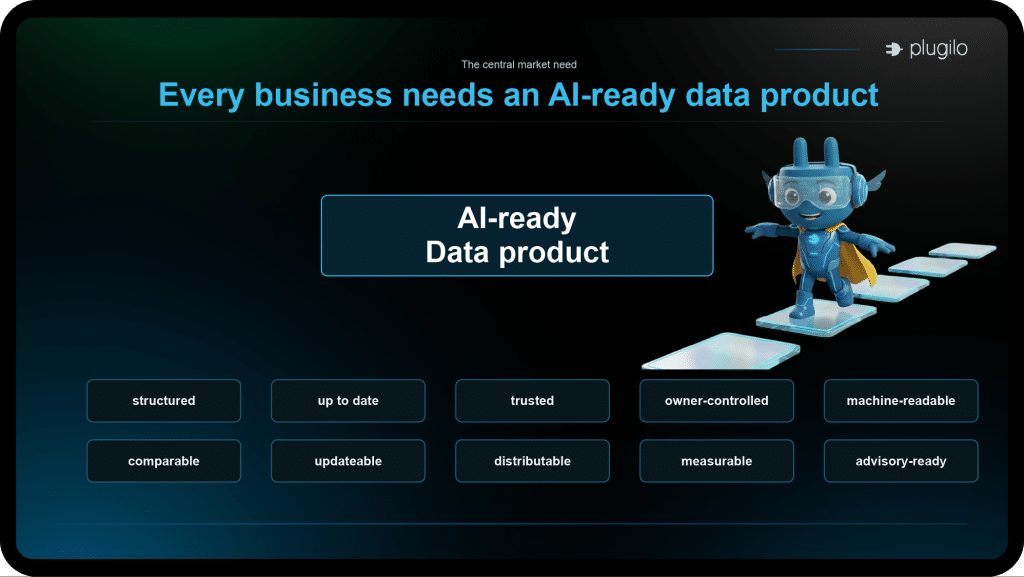
Every company will need a data package that is suitable for artificial intelligence.
By this, I do not simply mean any product description or a PDF. I mean up-to-date, verified and well-structured data that clearly comes from the company itself. This data must be understandable. It must be comparable. It must be possible to update it regularly. And it must be usable in different channels — in shops, on websites, in apps and in AI systems. Put simply: companies need more than a website. They need a clean, trustworthy data product that both machines and people can work with.
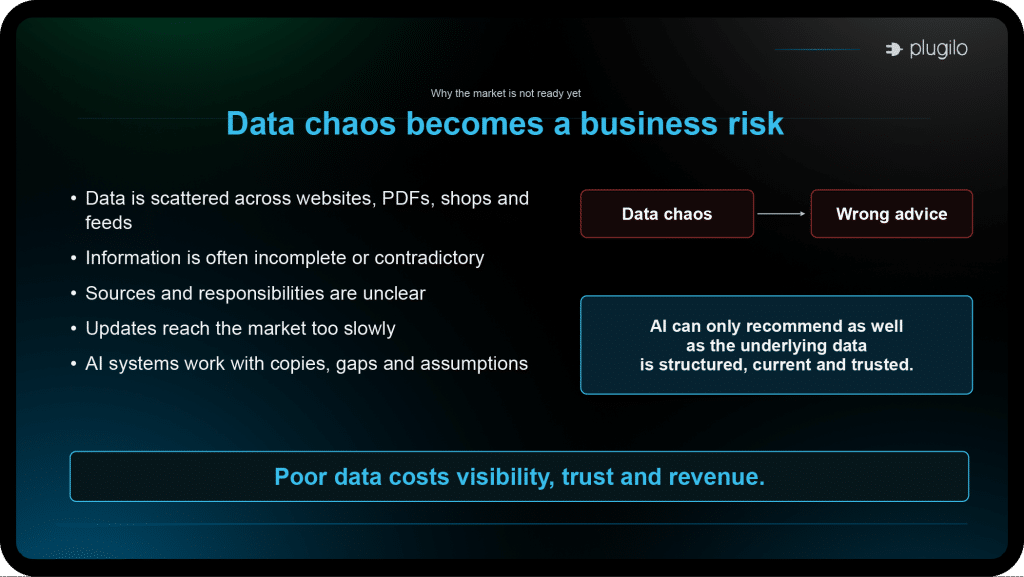
Today, the reality often looks different.
Product information is stored in many places: on websites, in shops, in PDF datasheets, with retailers, in product feeds or in old databases. This information is often not structured in the same way. Sometimes important details are missing. Sometimes data contradicts itself. Sometimes it is unclear what is current.
For customers, this is tedious. For retailers, it is costly. And for artificial intelligence, it is a real problem.
Because if the data is poor, the answers and recommendations also become poorer. A company then loses visibility, trust and, ultimately, revenue opportunities.
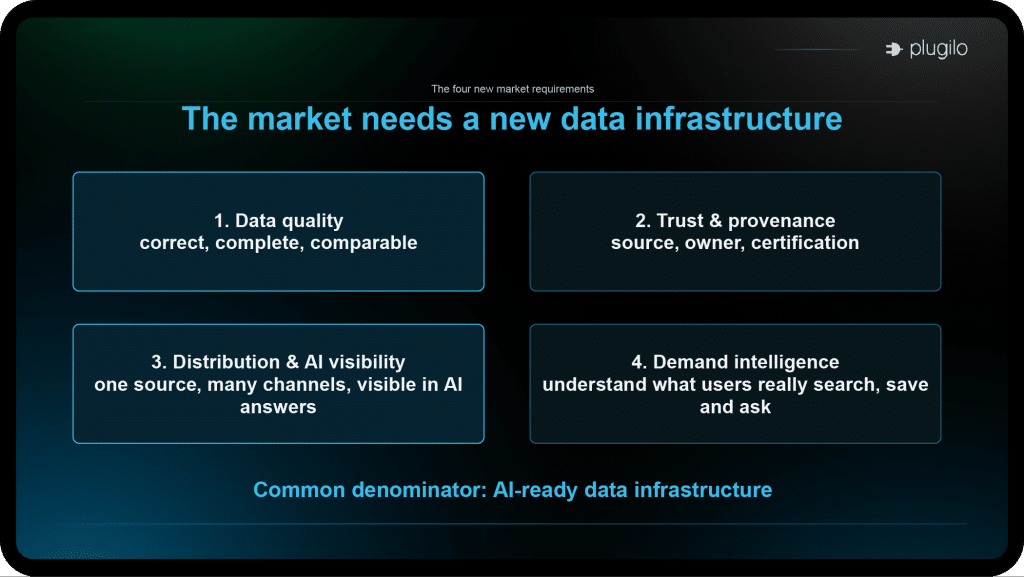
This development creates four clear requirements.
First: data must improve. It must be complete, correct and comparable.
Second: data must be trustworthy. It must be clear where information comes from and who is responsible for it.
Third: data must be easier to distribute. When a manufacturer changes a piece of information, this change should reach as many places as possible — the retailer, the shop, websites and later also AI systems.
Fourth: companies must better understand what customers are really interested in. What is being searched for? What is being saved? What is being compared? What questions do customers ask?
These four requirements are at the core of the new market.
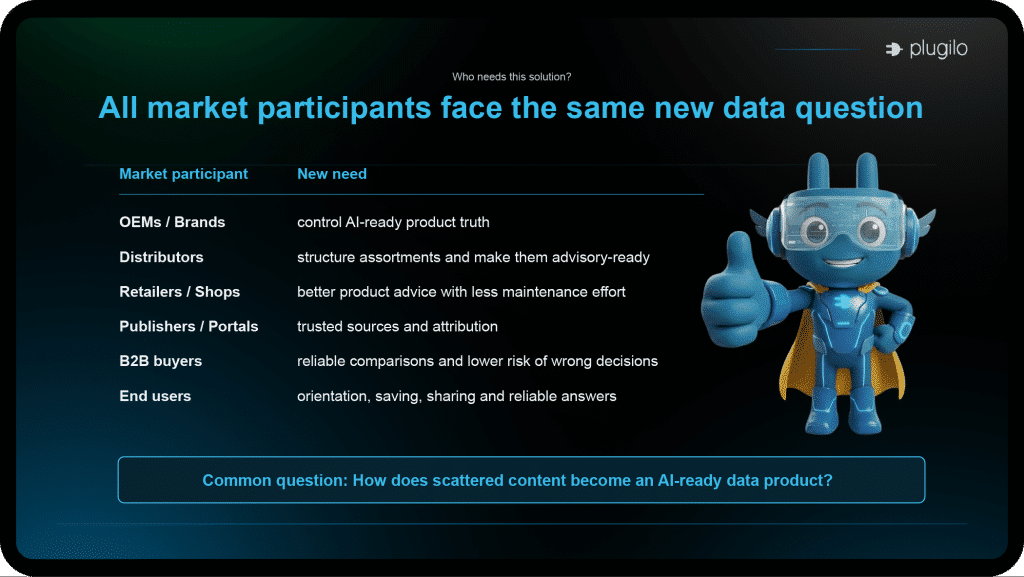
This challenge does not affect only one target group. Manufacturers and brands must ensure that their products are described and understood correctly. Distributors must structure large assortments cleanly. Retailers and shops need better product information without having to maintain everything themselves. Publishers and portals need reliable sources. Business customers need reliable comparisons and better bases for decision-making. And end customers want less chaos, less searching and more reliable answers.
At the core, everyone faces the same question: how can many scattered pieces of information become good, trustworthy and usable data?
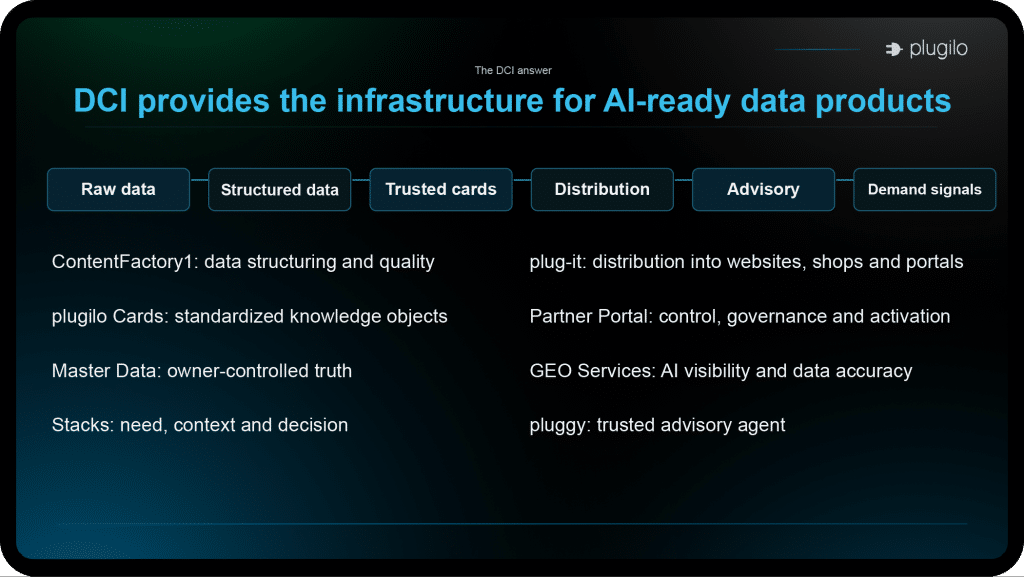
Our answer consists of several building blocks that work together. ContentFactory1 helps structure, check and enrich data. plugilo turns this data into clear, usable information objects. Master Data means there is a responsible data source that can serve as the truth. Stacks put information into a meaningful context. plug-it brings this information to websites, shops and portals. The Partner Portal gives companies control over their data. GEO services help companies check how they become visible in AI systems. And pluggy turns the data into understandable advice. Together, these elements create an infrastructure for the new data world.
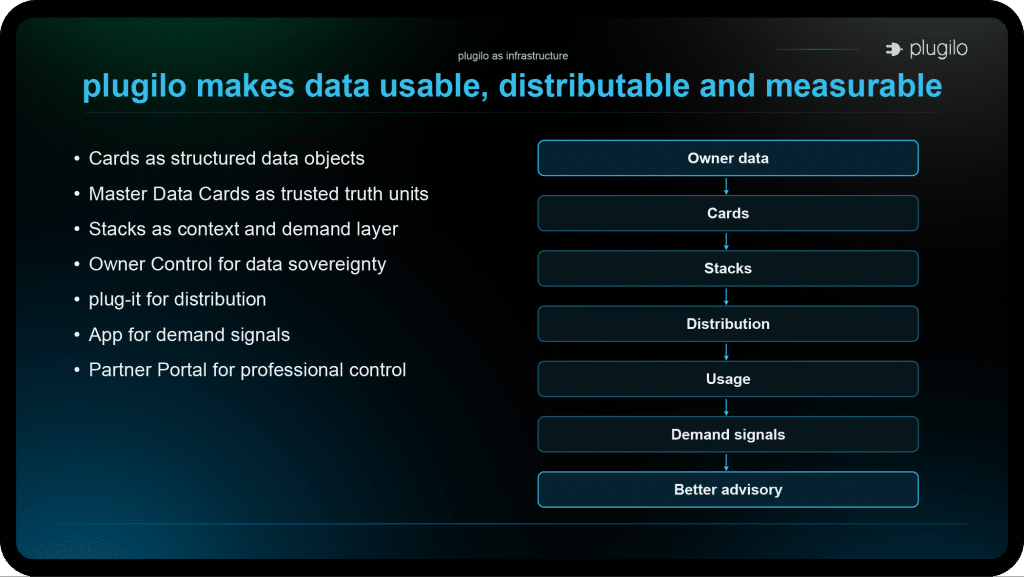
In this context, plugilo is not simply an app. plugilo is the infrastructure that makes good data usable, distributable and measurable. Cards are structured information cards. They can represent a product, a company, a service or a topic. Master Data Cards are particularly important because they are controlled by the responsible owner. Stacks bundle such cards, for example for a decision, a comparison or a topic.
With plug-it, this content can be embedded into existing websites, shops or portals. The app helps users save, organize and rediscover things. And the Partner Portal gives companies the ability to manage this data professionally.
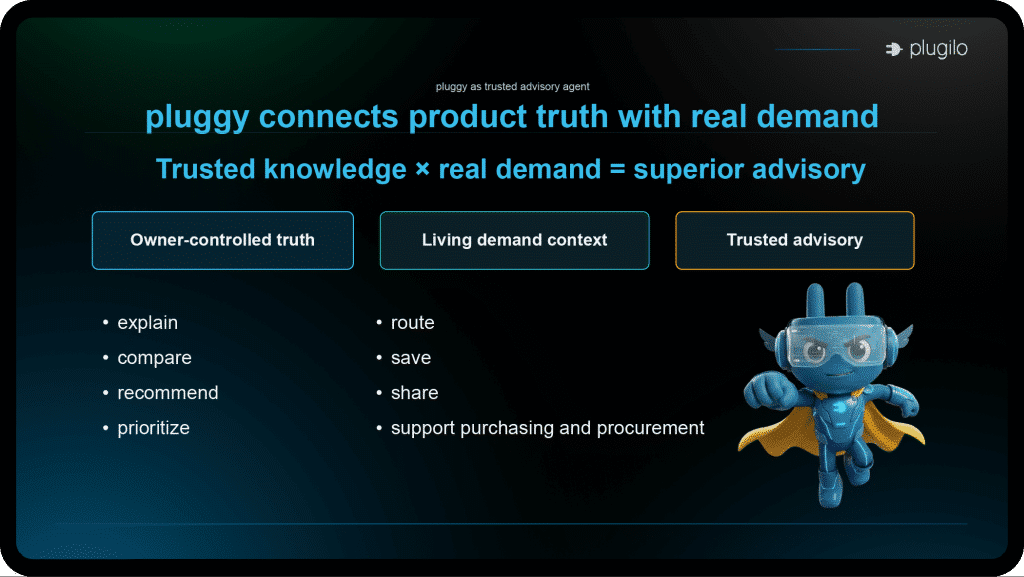
pluggy is the advisory interface of plugilo.
What is important is that pluggy should not be just another chatbot. pluggy should be based on verified and structured data. At the same time, pluggy should understand what a user is really looking for or needs. The idea is simple: good data plus real demand leads to better advice.
pluggy can explain, compare, recommend and route users further. This can help in a shop, at a manufacturer, at a retailer, with a publisher or also in business purchasing. This turns raw data into understandable and useful advice.
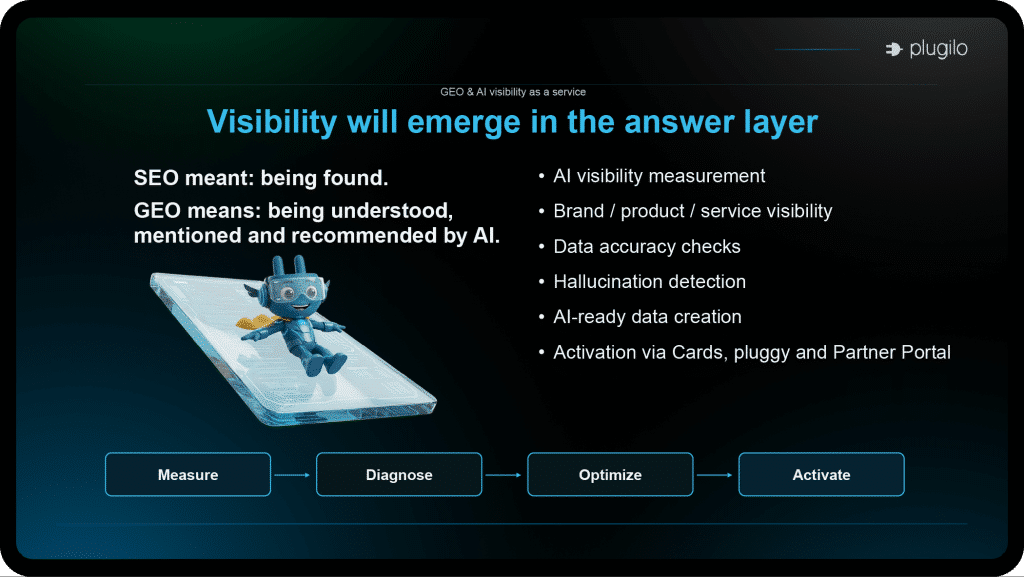
A new important topic is visibility in AI answers.
In the past, the main goal was to be found on Google. Today, a new question is added: is my company represented correctly by artificial intelligence? Is my product mentioned? Is it described correctly? Is it recommended? This is exactly what GEO is about. In simple terms, GEO helps companies be visible and correctly represented in AI answers. To do this, we must measure how a company or product appears in AI systems today. Then we must check what is wrong, incomplete or not visible. After that, data and content can be improved. For DCI and plugilo, this can become a concrete new service.
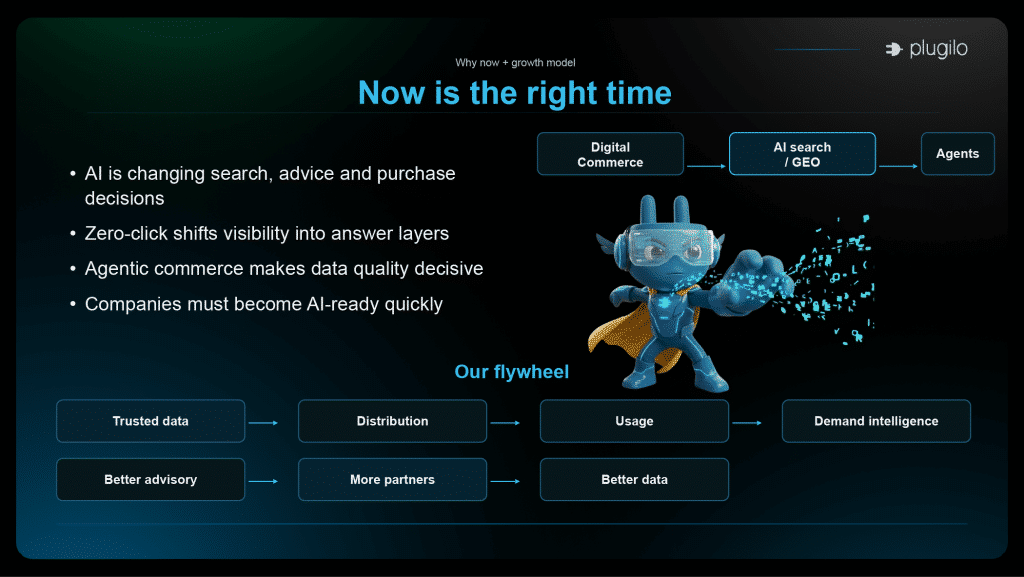
Now is the right time because several developments are happening at the same time.
Artificial intelligence is changing search. It is changing advice. And it is changing how purchase decisions are prepared. Companies are increasingly realizing that they must improve their data — not someday, but now. This creates our growth model. When more companies provide good data, the system becomes better. When this data is distributed more effectively, more usage and more feedback emerge. When we better understand what users search for and ask, pluggy can provide better advice. And better advice makes the system more attractive for additional partners. Step by step, a cycle can emerge: better data, better usage, better advice and greater market value.
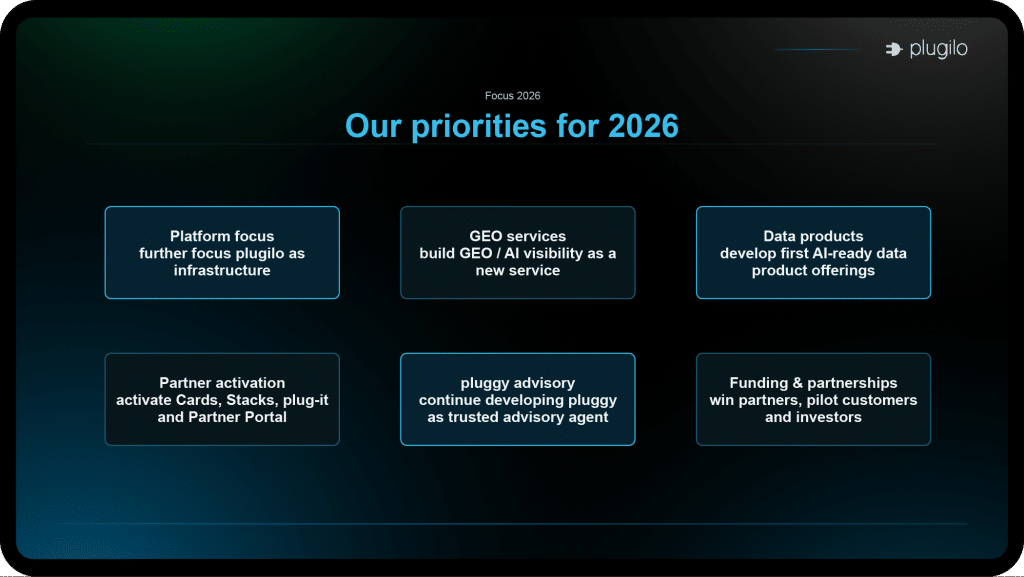
We have clear priorities for 2026.
We want to further focus plugilo as infrastructure.
We want to build the new service around AI visibility and data quality.
We want to develop first offerings that help companies make their data more usable for artificial intelligence.
We want to bring Cards, Stacks, plug-it and the Partner Portal more strongly into the market.
We want to further develop pluggy as an advisory function.
And we want to win selected partners, pilot customers and investors.
What matters is that we do not spread ourselves too thin. The goal is to turn the most important building blocks into marketable offerings and visible progress.
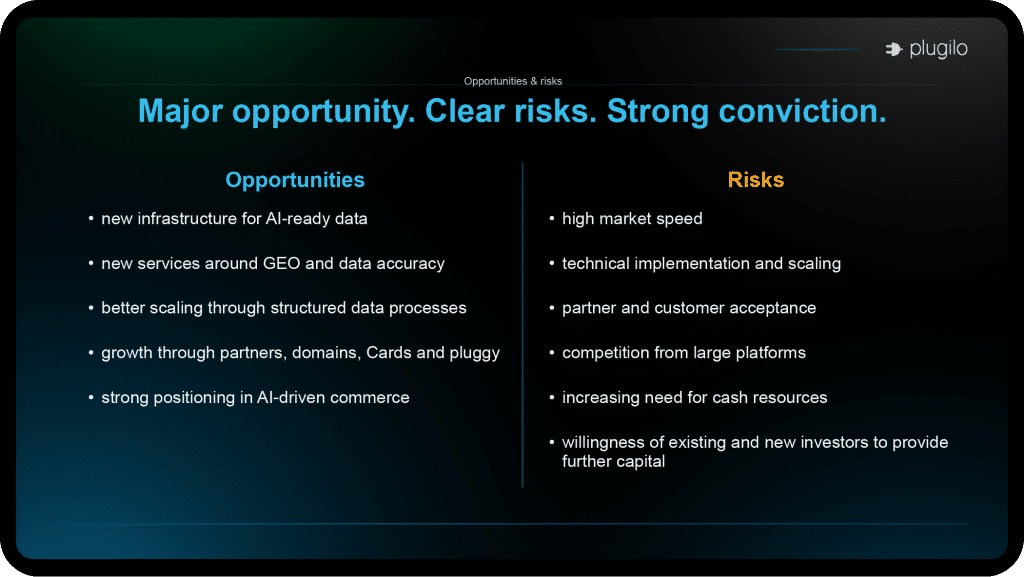
The opportunity is large.
Many companies will have to reorganize their data in the coming years. They will need to check whether their products and brands are properly visible in AI systems. They will need better data quality. And they will look for ways to distribute their information in a controlled and efficient way. This is exactly where DCI, ContentFactory1, plugilo and pluggy can play an important role. But of course there are also risks. The market is moving quickly. Technical implementation is demanding. Partners and customers must recognize the value. Large platforms will also be active. And we must say openly: if we really want to use this opportunity, we need sufficient financial resources. It will also be crucial whether existing and new investors are prepared to provide additional capital. Despite these risks, I am convinced: the market need is there. And with our experience and our solutions, we have a good starting position.
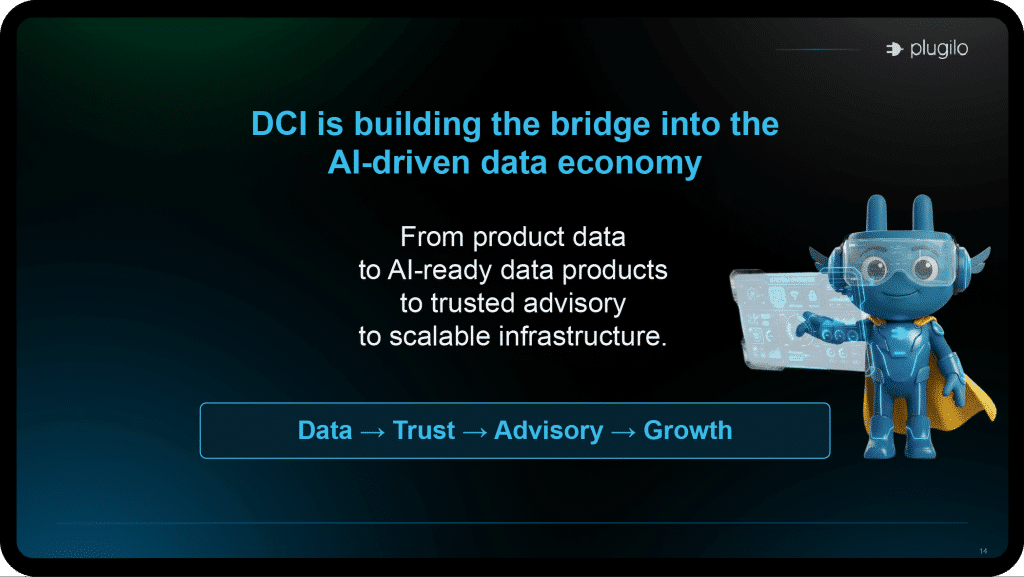
Let me simply summarize the thought at the end.
DCI comes from the world of product data, digital commerce and structured market information. This exact experience is now becoming particularly important again. Because artificial intelligence needs good data. Companies need control over their data. Customers need reliable answers. And the market needs new ways to distribute information in a clear, current and trustworthy way. Our task is to build this bridge: from product data to better data products, from better data products to advisory, and from advisory to scalable infrastructure. This is the opportunity we are working on.
Thank you very much for your attention.
I now look forward to answering your questions.